Family photos are an essential part of your genealogy research, so the more you have, the better it is. The right photo collection can breathe life into your family tree, helping you put faces to the names and learn about the context.
Having a large photo collection does take a lot of effort to manage. From being able to find the right photo at the right research stage to making sense of all the relations and events, you need the photos to be well-organized to make the most of your collection.
Here’s how we suggest you store and organize them.
Be Very Careful with The Photos
Old photos could be more delicate depending on how old they are and how they’ve been kept all these years. So, make sure to handle them carefully. This essentially means using clean hands and maybe even gloves when touching the photos.
Also, make sure all food and drink are kept at a distance while you work on the photos, and any extremely brittle photographs should be touched only minimally.
Observe, Identify, And Start Labelling
Of course, a large part of photo research for genealogy is identifying the people in the photos. There are several ways you can go about this:
- Try to figure out the era the photos were taken in (For example, fashion can help indicate the era)
- Focus on one photograph at a time.
- Consider who you received the collection from—they’re likely directly related to them.
- Ask the older family members to help you identify the people.
Once you can identify the people in the photos, you can start labeling them all. This will help you get things organized gradually.
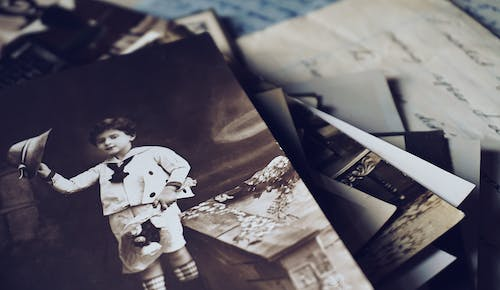
Scan The Photos to Make Digital Copies
We’re living in a digital age, so there’s no reason not to make digital copies of all your photos. This will not only make your research easier—because the photos will be more easily accessible—but it’ll also help you keep your photos safe.
So, carefully scan all the family photos, and store them in separate folders based on era, event, or family branches.
Discard The Non-Essentials
We family researchers are often considered hoarders. In reality, we just like to hold on to things that have sentimental value, right?
But not every photo in your collection falls into the sentimental category; some can be discarded. For instance, any photos of scenic beauty from vacations that have no people in them can be discarded. You can also toss any duplicate photos, especially if you have everything scanned anyway.
Store The Photos in A Cool and Dry Space
This is one of the most important things you need to do. Keeping photos in dark basements or super warm attics can damage them over time. So, make sure your photos are all installed in storage containers in cool and dry spaces, away from direct heat or light.
Also, occasionally, take the photos out, and reorganize them to make sure they’re not sticking to one another.
If you’d like help incorporating your family photos into your family research, let us help. We offer traditional genealogy services by the best DNA Detective online.